A small New England town center and the landmarks that tell its long history.
Sherborn’s past is hard to miss. It’s in the stone walls, old homes, working farms, and rural landscape that still define the town today.
Long before European settlers arrived in the area, Indigenous people lived and traveled through the Charles River valley. The Sherborn area was associated with the Massachusett and Nipmuc peoples, who continued to live in the region after English settlement began.
English colonists began settling here in 1652, when the Charles River valley from South Natick toward Medway was known as Boggestow. Early settlers established farms near the river, and Sherborn was incorporated in 1674. By 1700, the town had a meeting house, schoolmaster, sawmill, and gristmill.
For the next two centuries, Sherborn was largely a farming community, with apple orchards, dairy farms, cranberries, and other crops. Apples became especially important, and Sherborn was well known for its hard (alcoholic) cider. In 1888, the Holbrook Cider Mill on Forest Street pressed more than 1.25 million gallons and was regarded as the largest refined cider mill in the world. Sherborn cider was shipped across the country and overseas. In fact, Jonathan Holbrook’s cider mill was a major reason the railroad took its route through the center of town.
Over time, Sherborn changed from a farming town into the mostly residential community it is today, but its past remains easy to see. Stone walls line roads and trails, historic homes remain throughout town, and several working farms and farm stands continue its agricultural tradition.
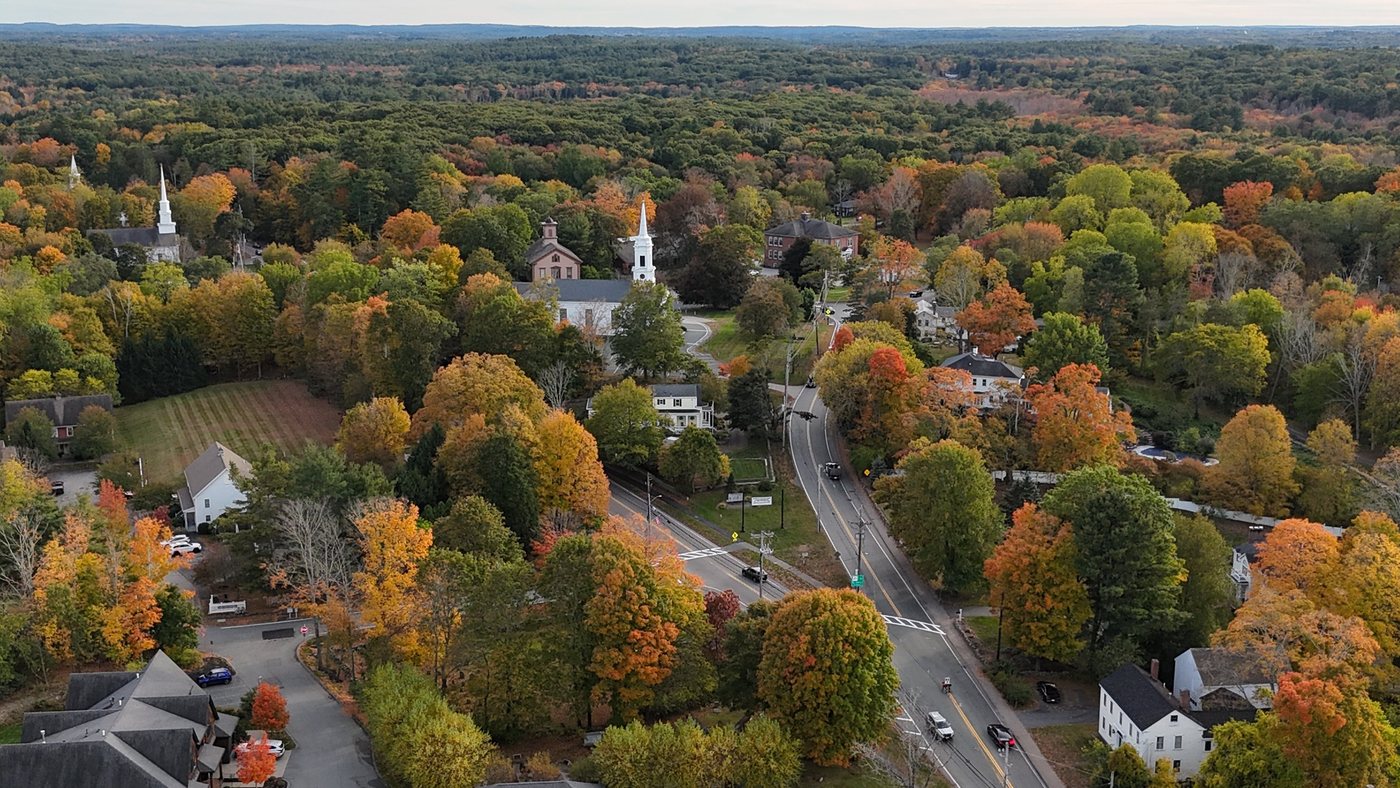
The town center, near the Route 16 and 27 intersection, is part of the Sherborn Center Historic District on the National Register of Historic Places. Historic homes, churches, the former Town House, and other landmarks in town help tell the story of more than three centuries of Sherborn history.
The center of town from above, where Routes 16 and 27 split.
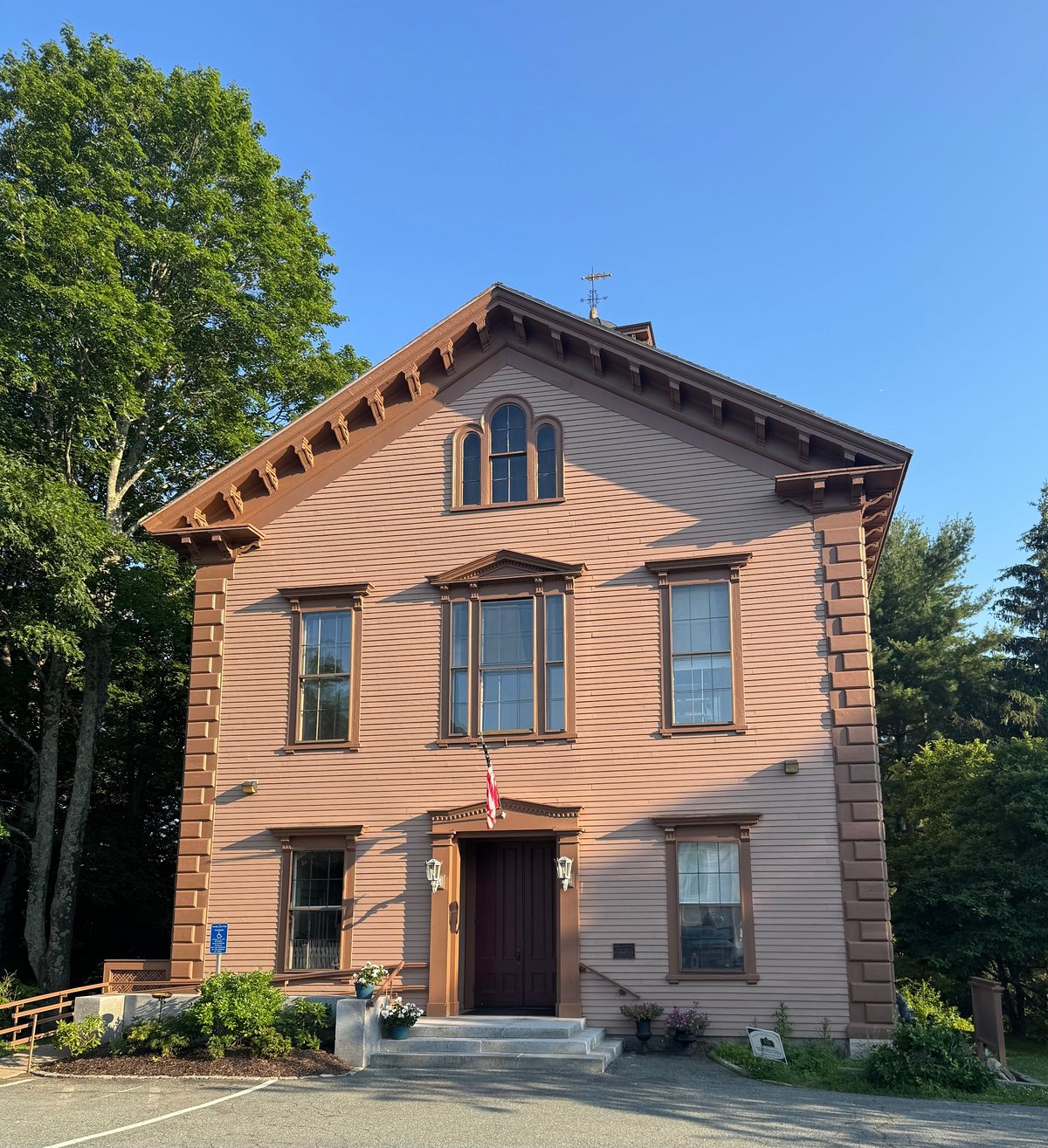
1858 Town House
3 Sanger Street
The 1858 Town House on Sanger Street was paid for by a bequest from Sherborn-born merchant Thomas Dowse. It once held the high school, library, and town offices. By the 1980s, after years of disrepair, the Town planned to sell it. Instead, residents formed a nonprofit foundation, raised nearly $1 million privately, and restored it. The Sherborn 1858 Town House reopened in 1992 and is still run without tax dollars; many residents simply call it the Sherborn Community Center.
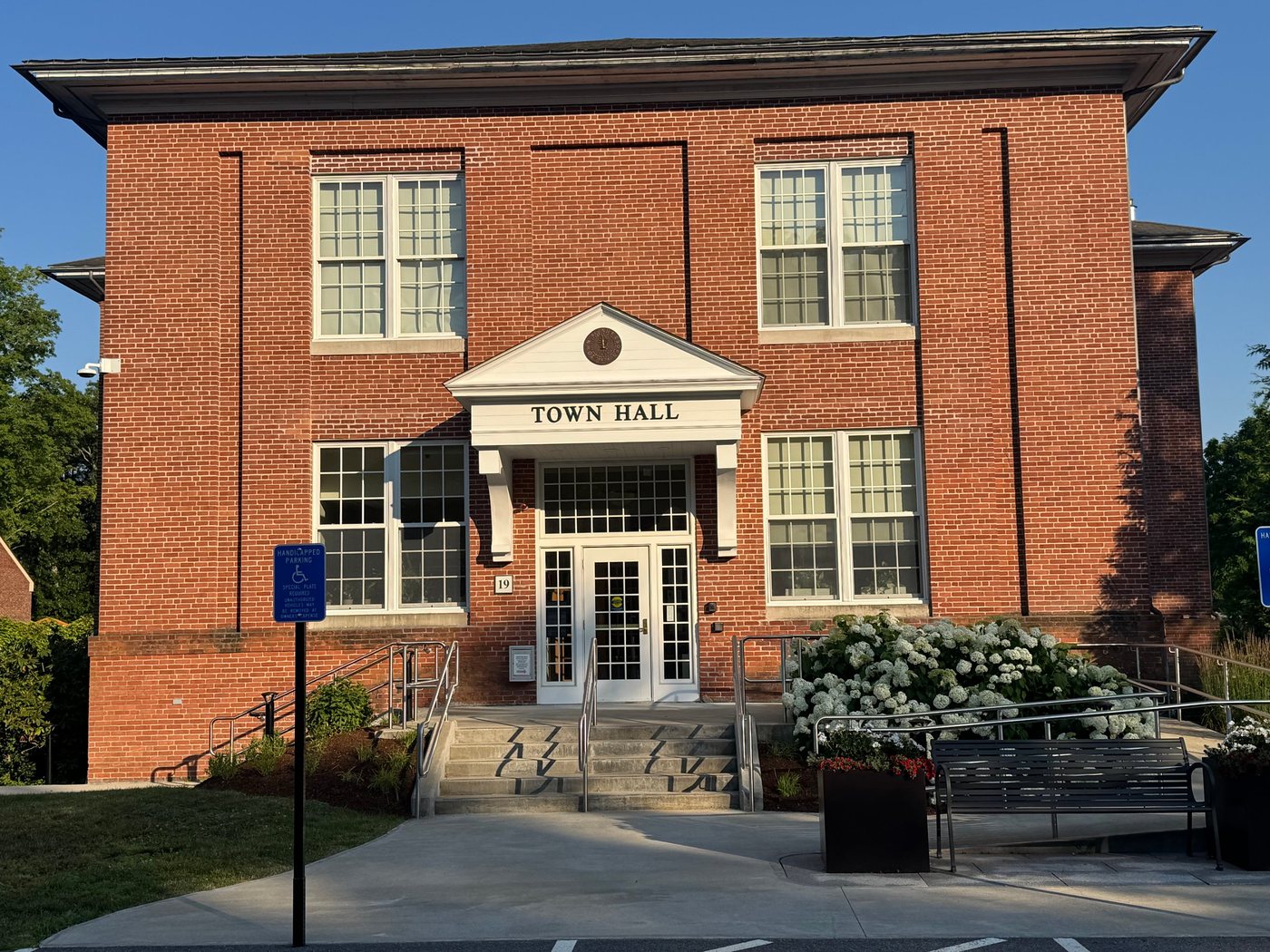
Sherborn Town Hall
19 Washington Street
Sherborn’s Town Hall building began as the Center School, a brick school building that was completed in 1910. It brought eight grades together in one central school, with two grades sharing each of its four classrooms. A new wing doubled the school’s size in 1950, but after Pine Hill School opened in 1957, the Center School was used mainly for second and third grades. It closed as a school in 1981 and was renovated for town offices. A larger renovation was completed in 2002, when the building was officially renamed Town Hall.
Town Hall sits across Sanger Street from the 1858 Town House. The Police Department and the Sherborn Library are right next to it, and parking for all three is available in the lot accessed from Washington Street.
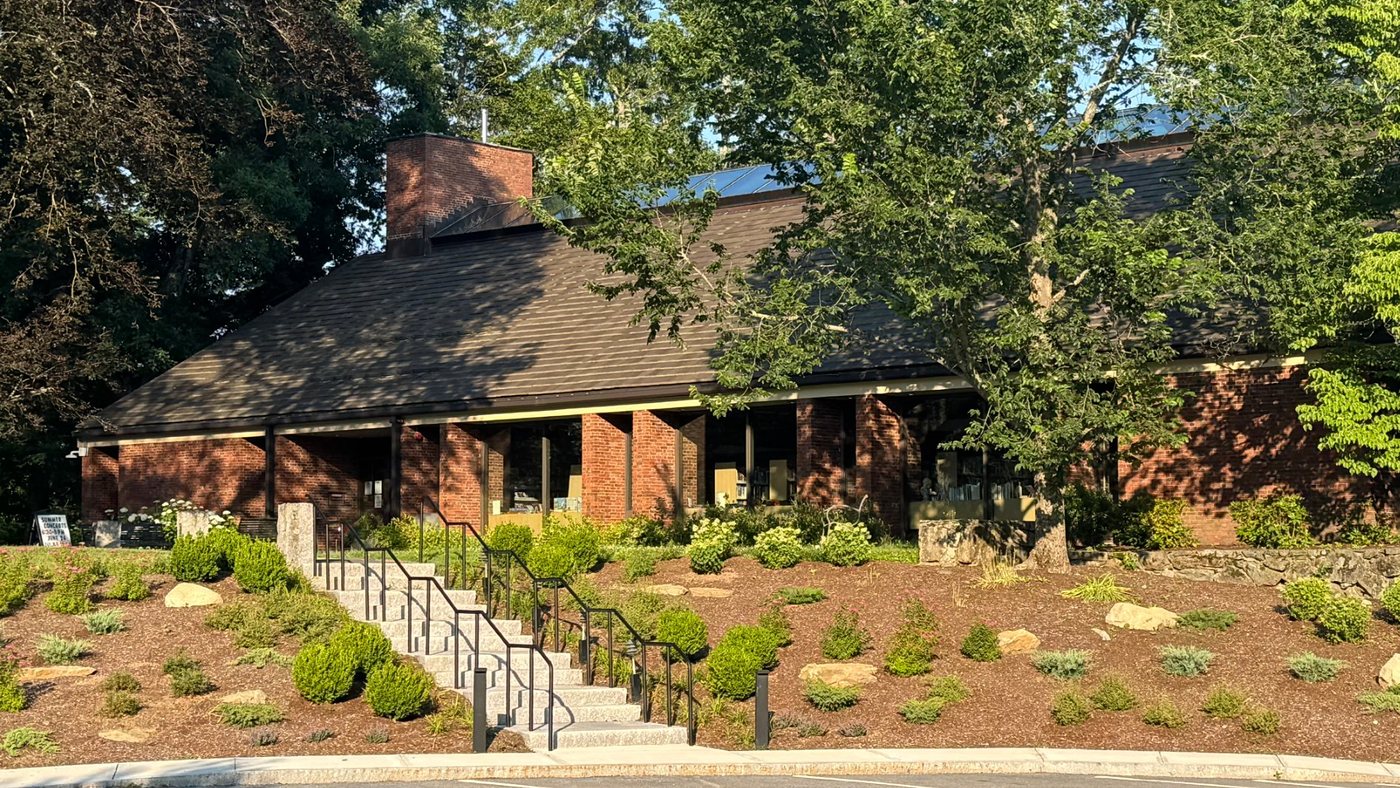
Sherborn Library
4 Sanger Street
Richard and Mary B. Saltonstall gave the library to the town in 1971. After a major renovation and expansion, it reopened in 2023 with a children’s wing and story-time “tree house,” space for teens, and meeting rooms. Beyond books, it offers programs for every age, museum passes, and local history collections. sherbornlibrary.org ↗ · 508-653-0770
Memorials and markers
Near the split of Routes 16 and 27
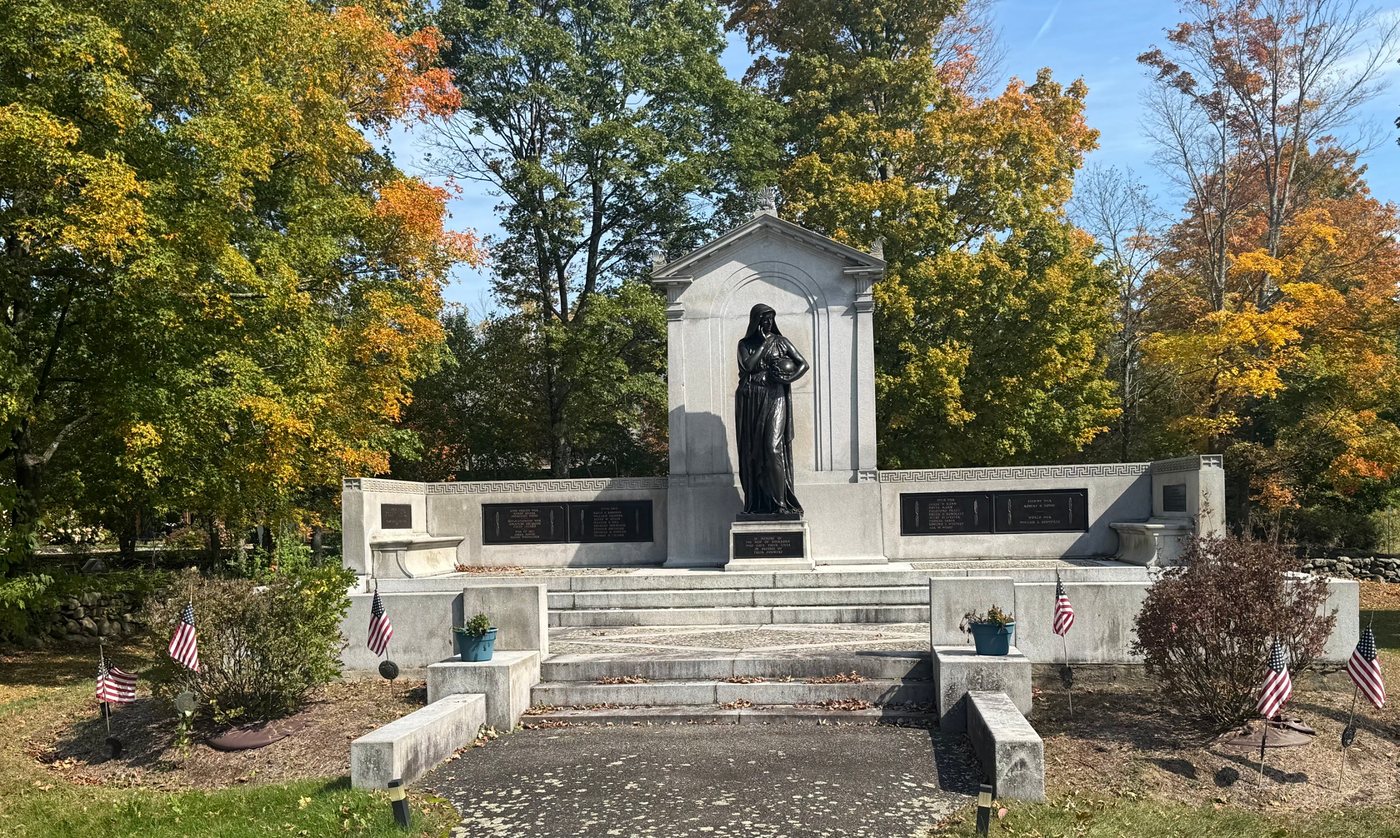
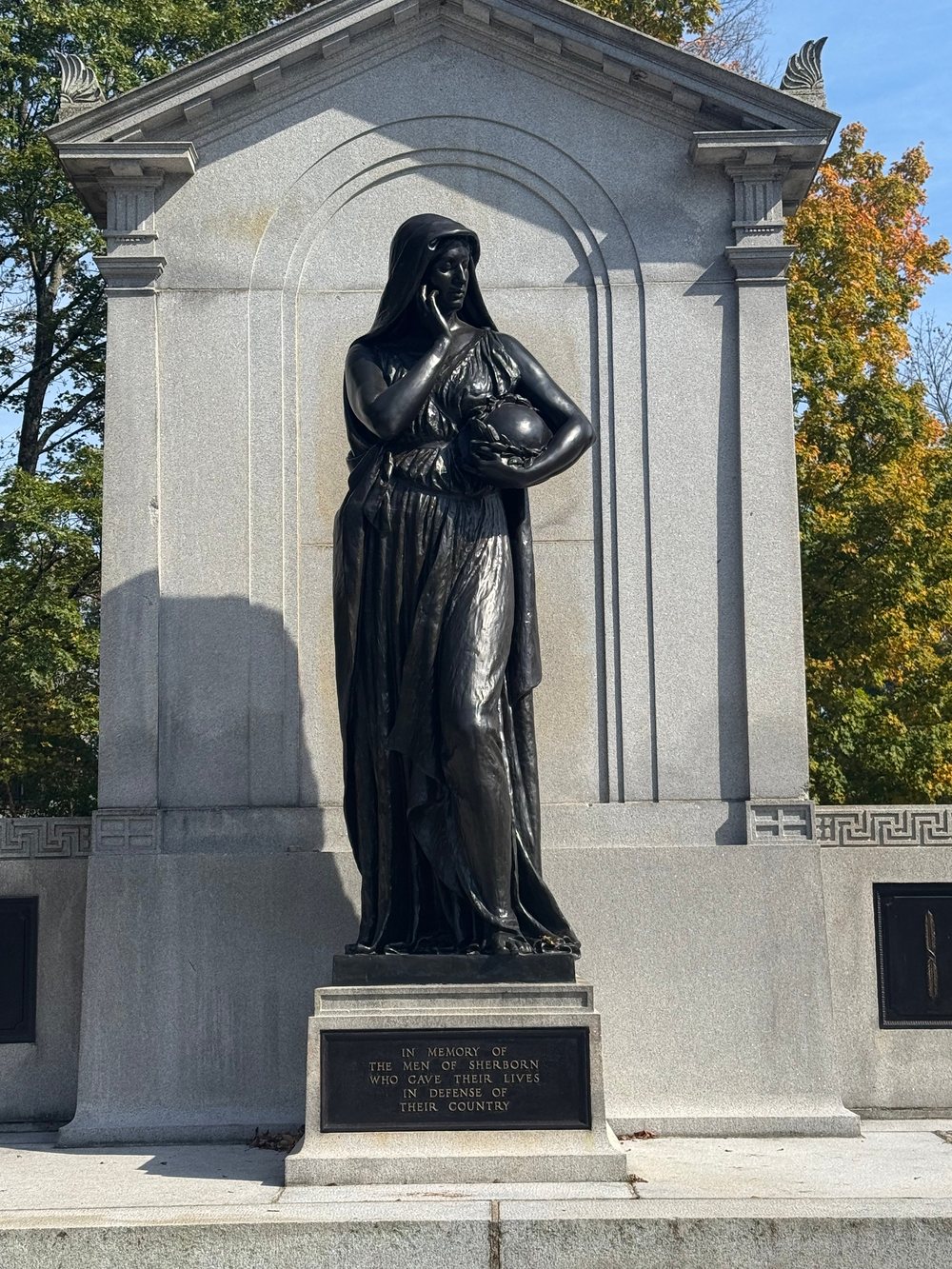
Cyrus Dallin’s Memory Statue, dedicated in 1924 for the town’s 250th anniversary, honors Sherborn residents who died in the nation’s wars. On the green nearby are a veterans’ memorial stone and a 1930 Massachusetts Bay Colony tercentenary marker.
Peace Memorial Park
2 North Main Street · open sunrise to sunset
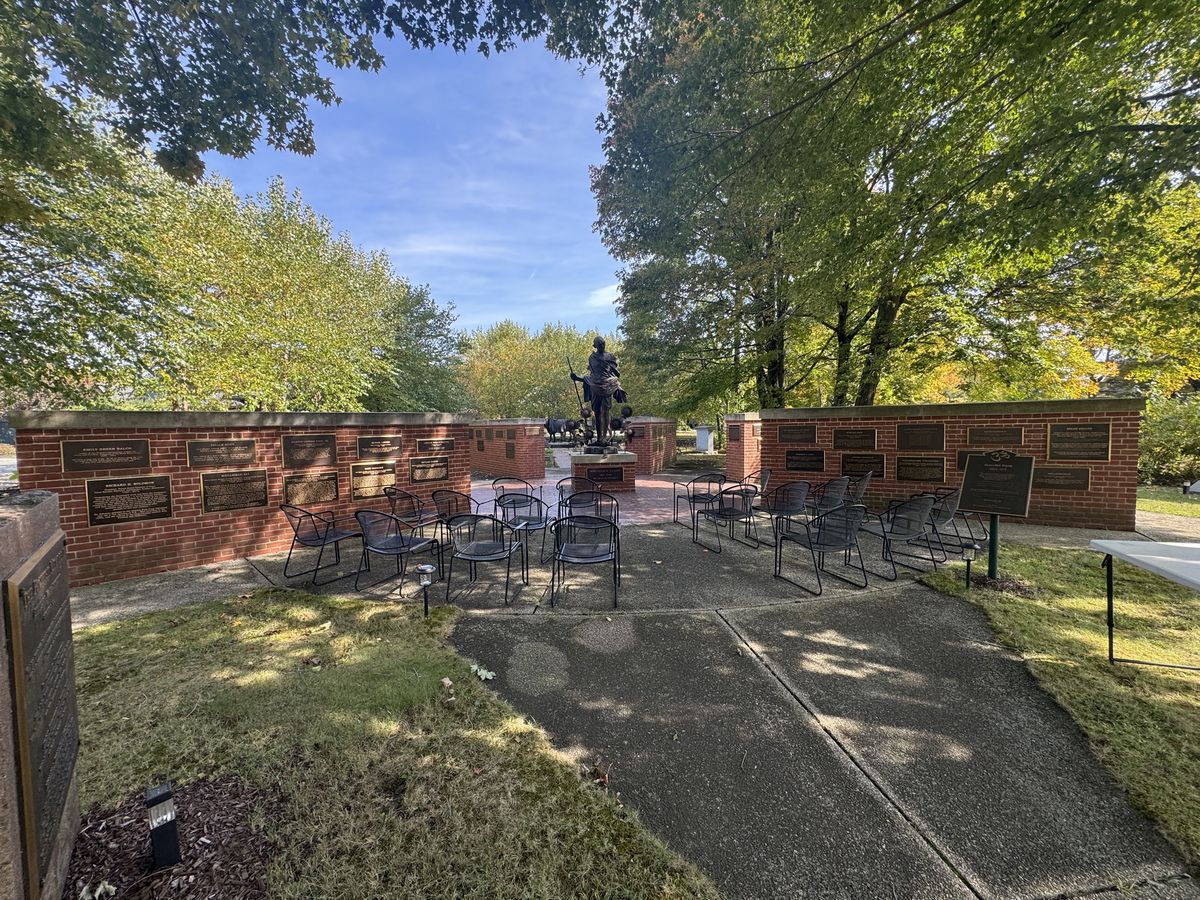
A small, quiet park in the center of town, privately owned but open to the public and maintained by the Peace Abbey Foundation. The Pacifist Memorial was dedicated on October 2, 1994, Gandhi’s birthday, and features a large bronze statue of Gandhi surrounded by brick walls with plaques honoring people known for their work for peace, including Martin Luther King Jr., Helen Keller, and Muhammad Ali.
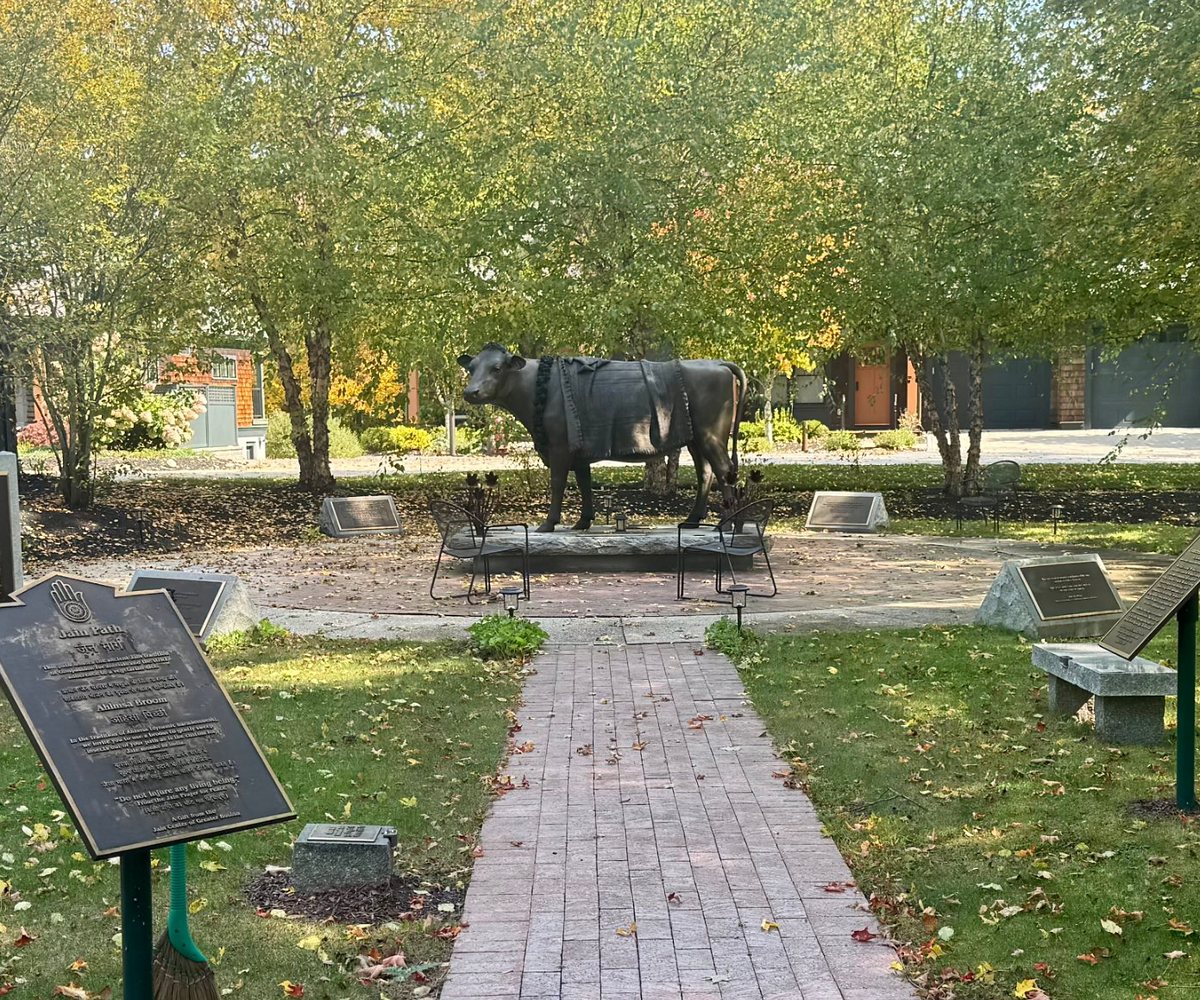
The park is also home to one of Sherborn’s more unusual local stories. In November 1995, a cow named Emily escaped from a slaughterhouse in nearby Hopkinton and remained on the run for 40 days before coming to live at the Peace Abbey on Christmas Eve. Emily lived there until 2003. Today, a life-size bronze statue of her stands over her grave.
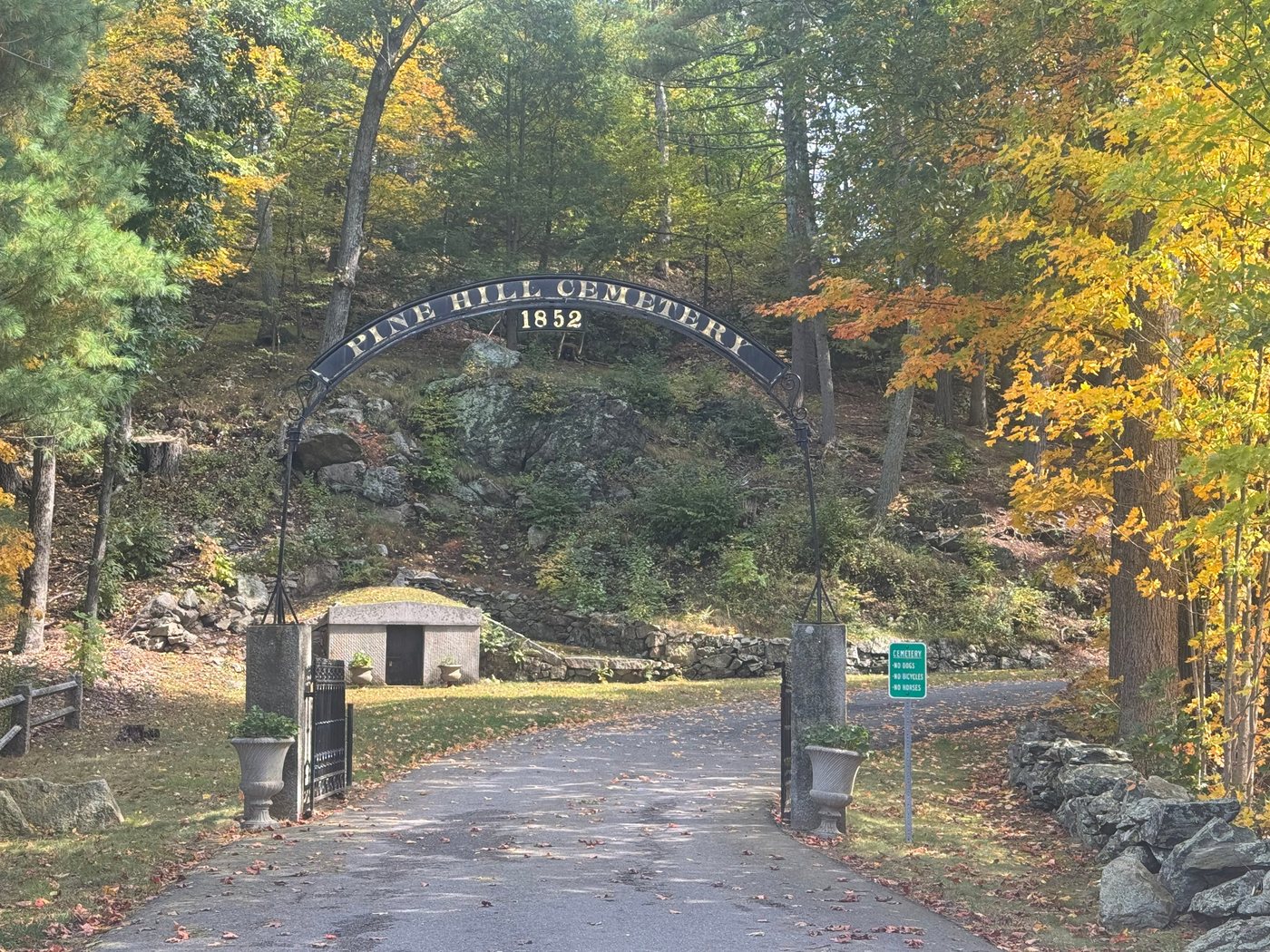
Pine Hill Cemetery
Dedicated 1852
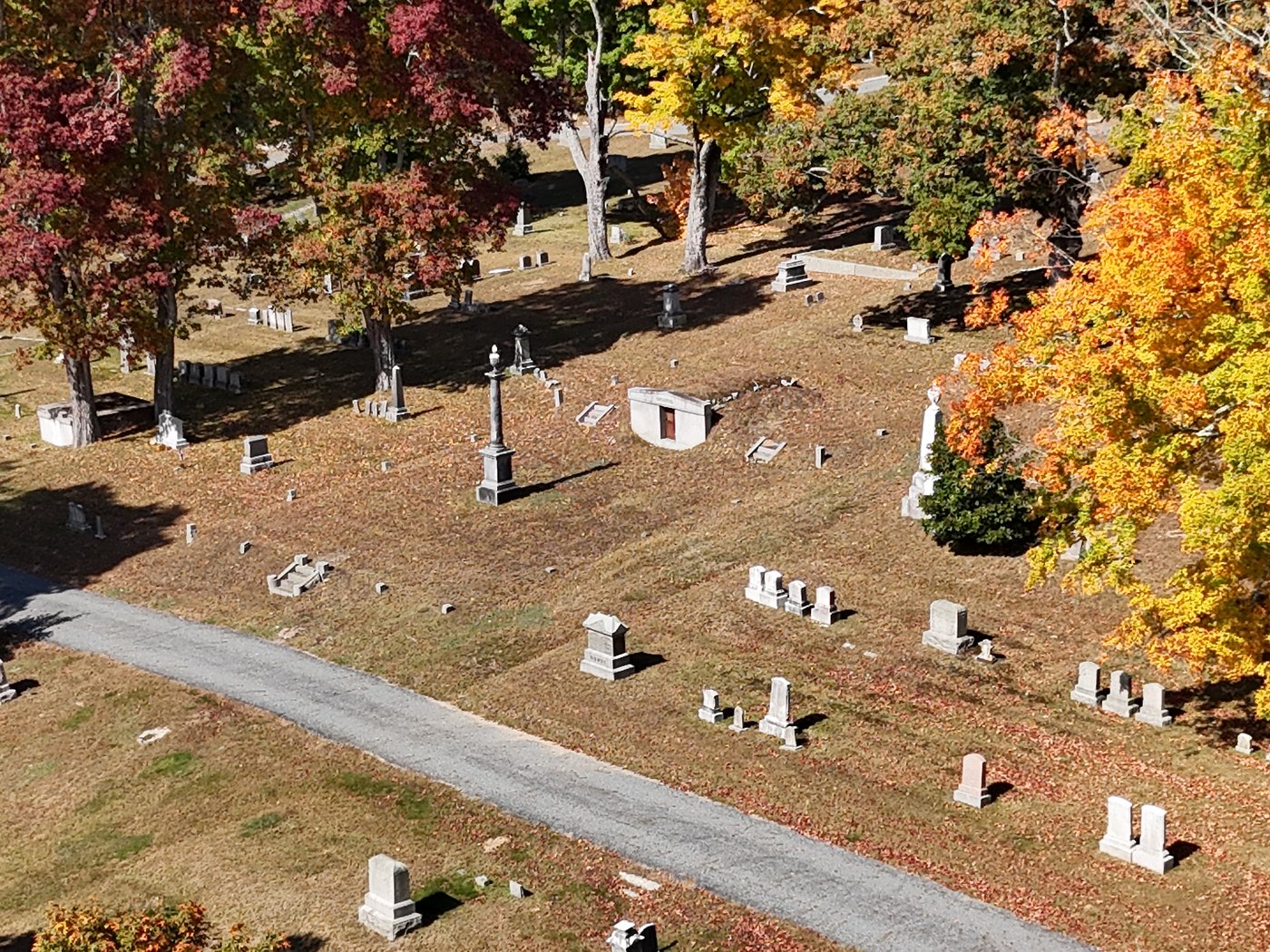
Pine Hill Cemetery sits behind an iron-arched entry gate. It is a ten-acre Victorian garden cemetery of winding roads and carved monuments on a rocky hillside. It is the newest of the town’s eight burying grounds and the one still in use today. The cemetery is open daily from dawn to dusk for visitors, including those coming to visit the graves of loved ones.