
Sherborn history
Stone Walls of Sherborn
Old fieldstone walls along the town’s roads, fields, and woods.
Stone walls are so common around Sherborn that it can be easy to stop noticing them. They’re almost everywhere you drive, walk, or run around town.
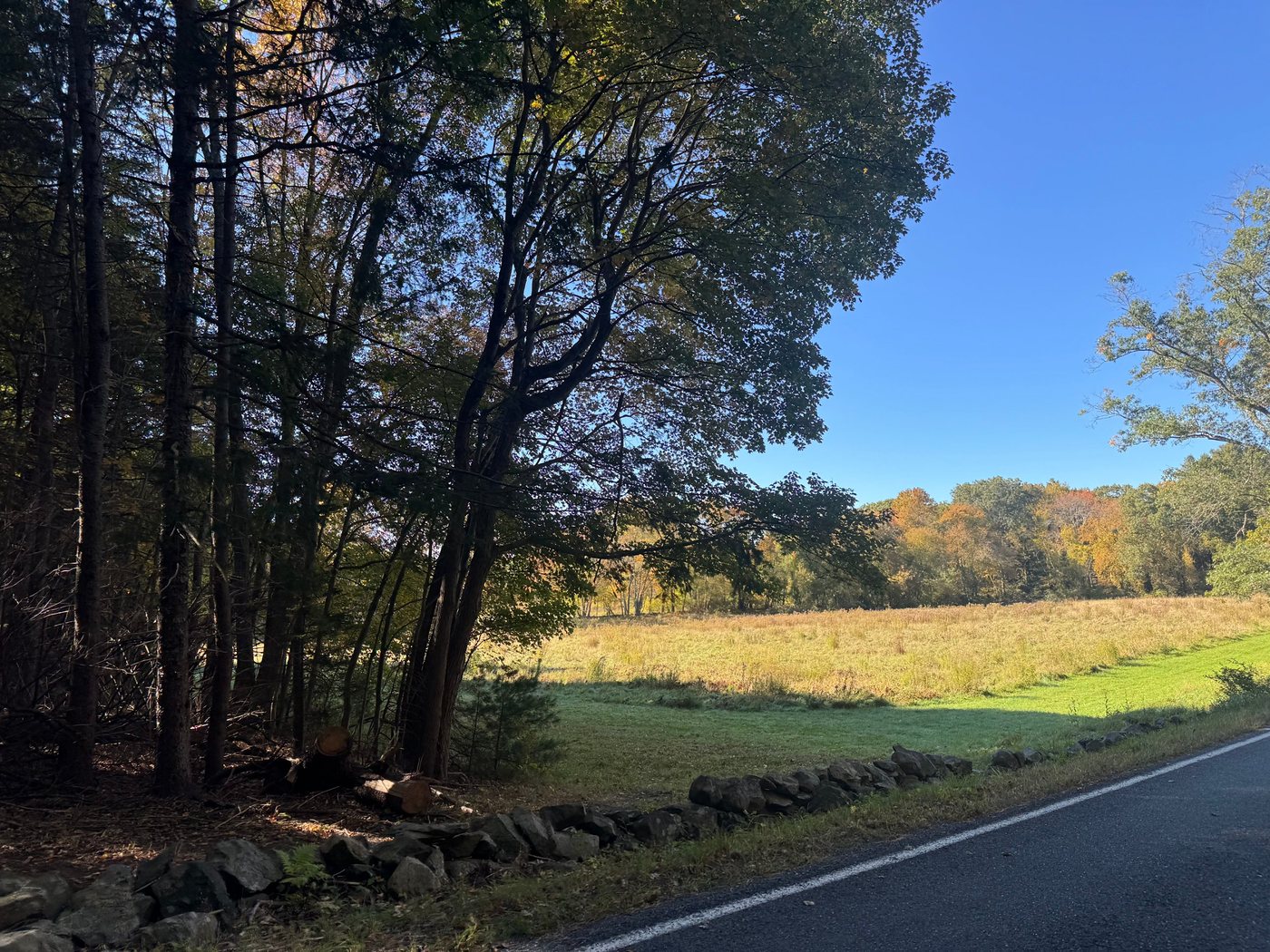
From the center of town to the trails, stone walls are found throughout the town. They run alongside roads, separate fields, disappear into the woods, and sometimes continue for hundreds of feet through land that has not been farmed in generations. Along with Sherborn’s narrow roads, large trees, farms, and open fields, stone walls are one of the features that give Sherborn its rural New England character.
Most of the old fieldstone walls found throughout New England are related to farming. Glaciers left the region with rocky soil, and as farmers cleared and worked their land, stones continually had to be removed from fields and pastures. Rather than haul them over long distances to dispose of them, farmers moved them to the edges of fields, property lines, and to existing fences. Over time, those piles of stone became walls. According to the University of Connecticut Stone Wall Initiative, most of New England’s historic agricultural stone walls were accumulated or built between roughly 1750 and 1850.
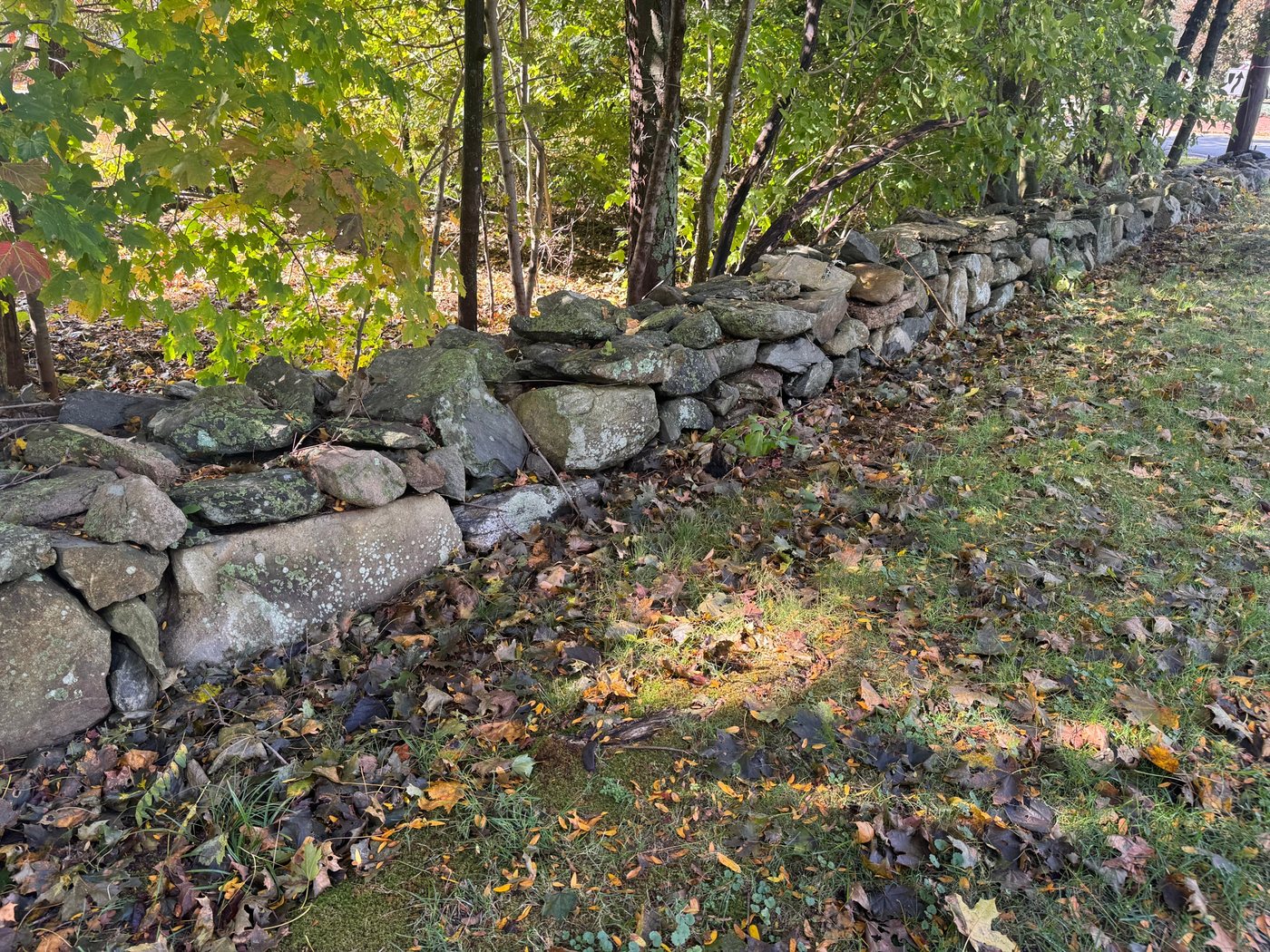
Stone walls served numerous purposes. They got rocks out of land that was being cultivated for farming, helped define fields and property boundaries, and could be incorporated into fencing for livestock. Some were carefully constructed, while others were little more than organized rows of fieldstone. Over the years, many have been rebuilt or repaired, so it’s not always possible to look at a wall today and know exactly when or why it was originally built.
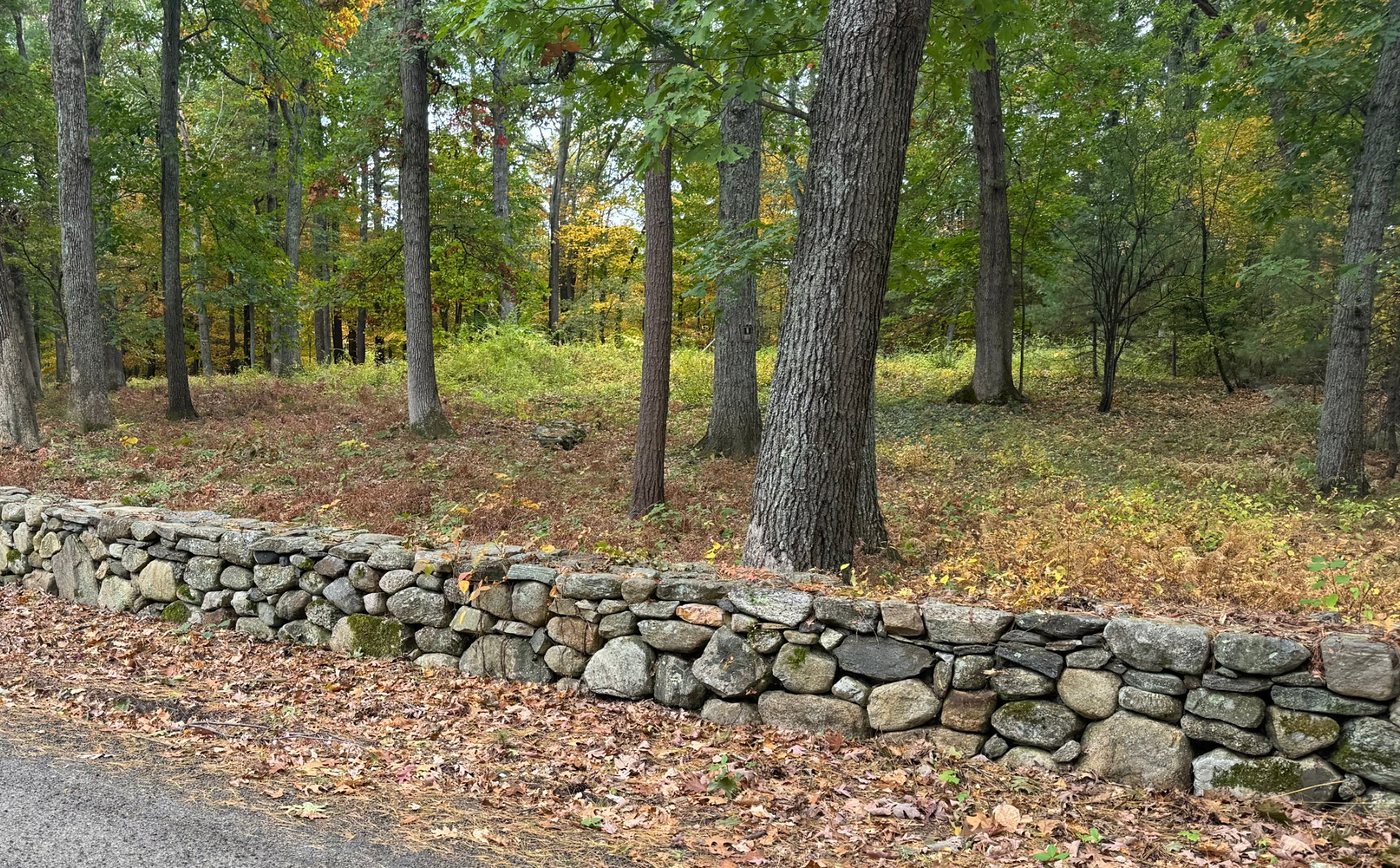
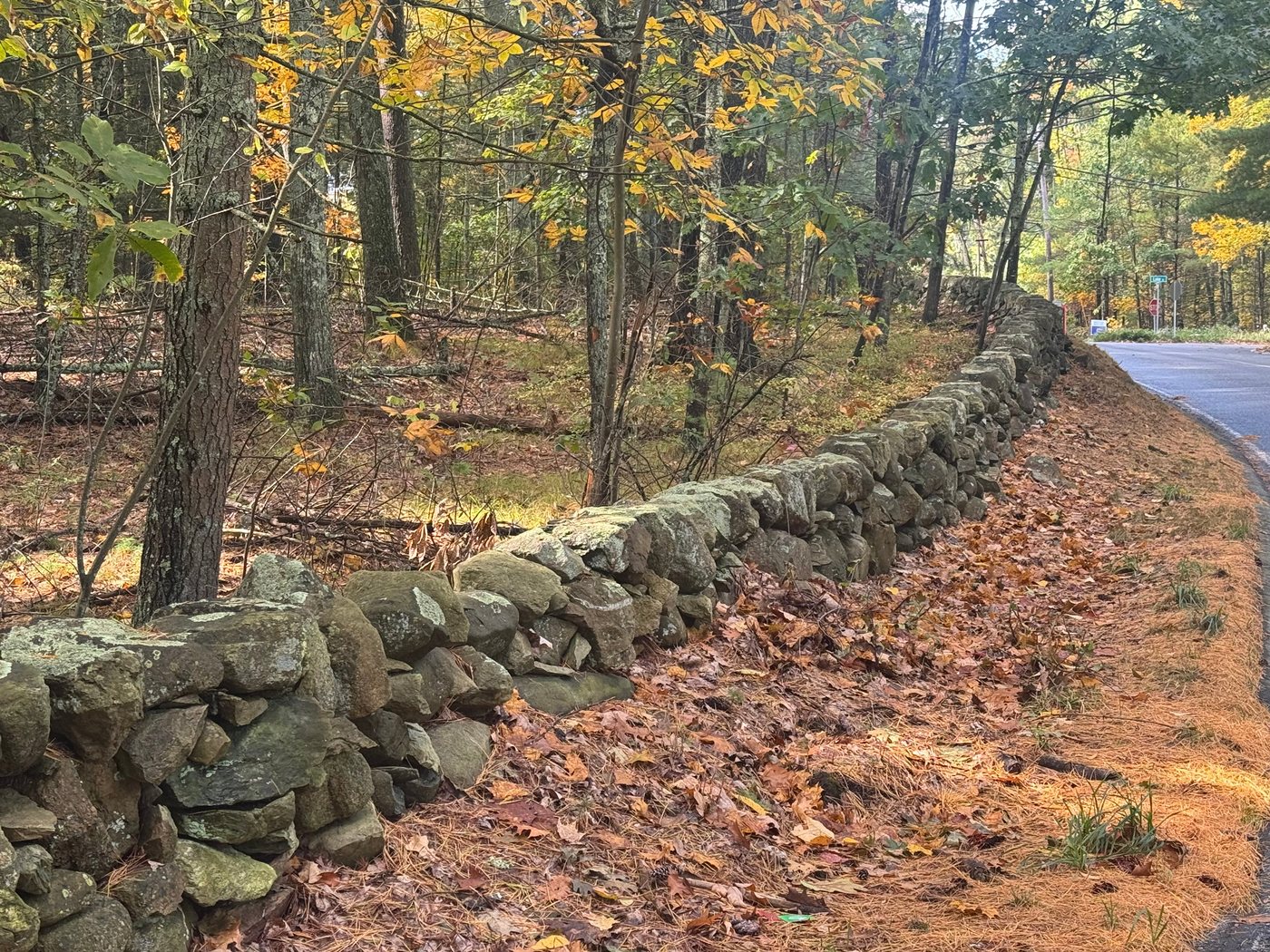
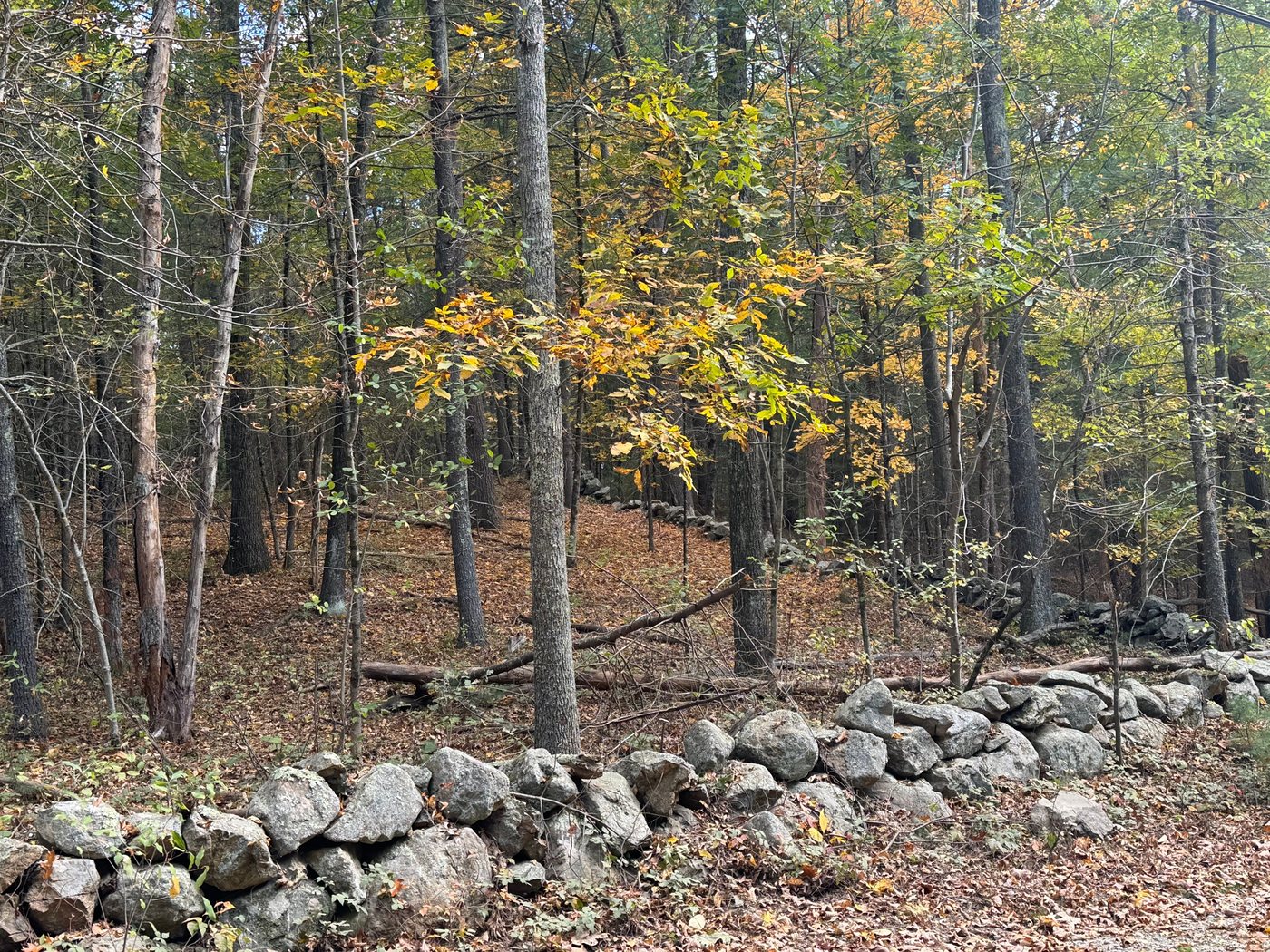
Sherborn was primarily a farming community for most of its early history, so stone walls became part of the landscape that still stands out today. One of the interesting things about walking through Sherborn Town Forest, Rocky Narrows, Barber Reservation, and the town’s conservation land is finding a stone wall running through what looks like completely natural forest. In many cases, the walls are a reminder that the land around it once looked very different and served different purposes.
Stone walls remain especially noticeable along Sherborn’s roads. Throughout town, stone walls are a treasured feature of public and private properties. In fact, the Town’s Open Space and Recreation Plan from 2018 specifically calls out views of open land with historic stone walls as some of Sherborn’s most valued scenery.
Sherborn’s stone walls are not monuments in a traditional sense, but they tell a lot about Sherborn’s history. They are also one of the small things that make the town look and feel different. The next time you’re in town, make sure to notice the stone walls.